
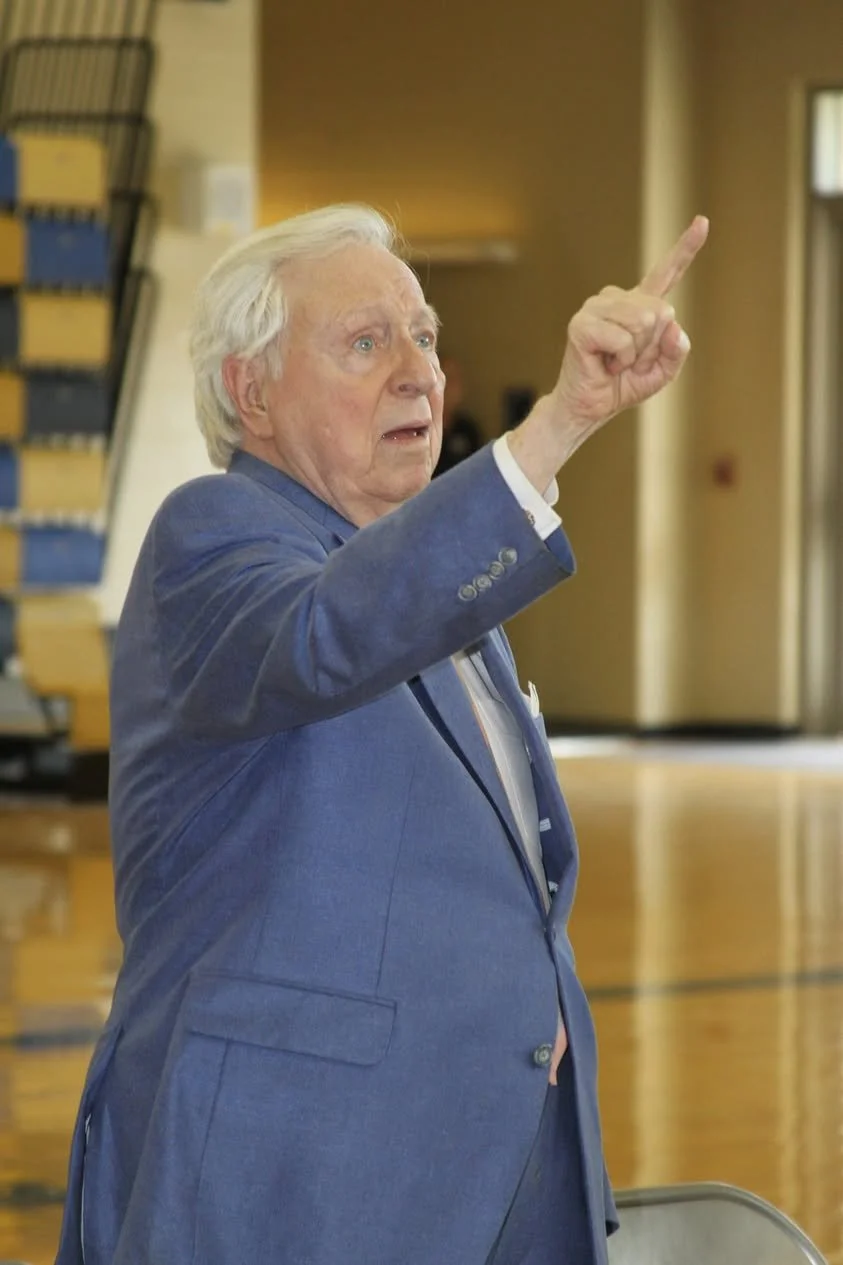
Donald Palmer is a successful businessman and a tireless advocate for his hometown of New Orleans.
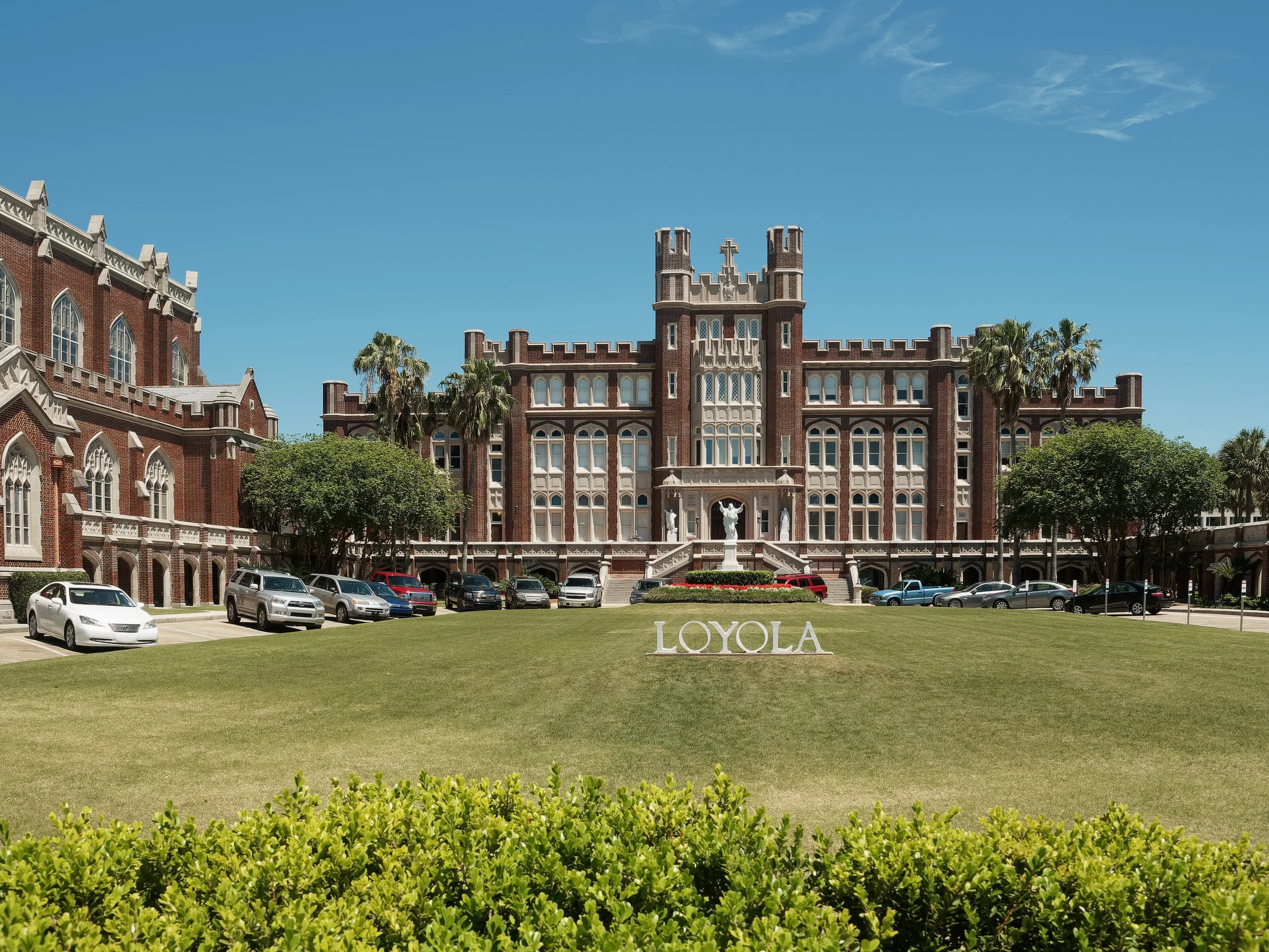
A graduate of Holy Cross High School in 1943 and Loyola University in 1946, this 2017 feature in LOYNO, Loyola University New Orleans’ Magazine, tells his story.
Donald Palmer started working at a bag company the Monday after graduation, started his own company a year later, and he hasn't stopped yet.
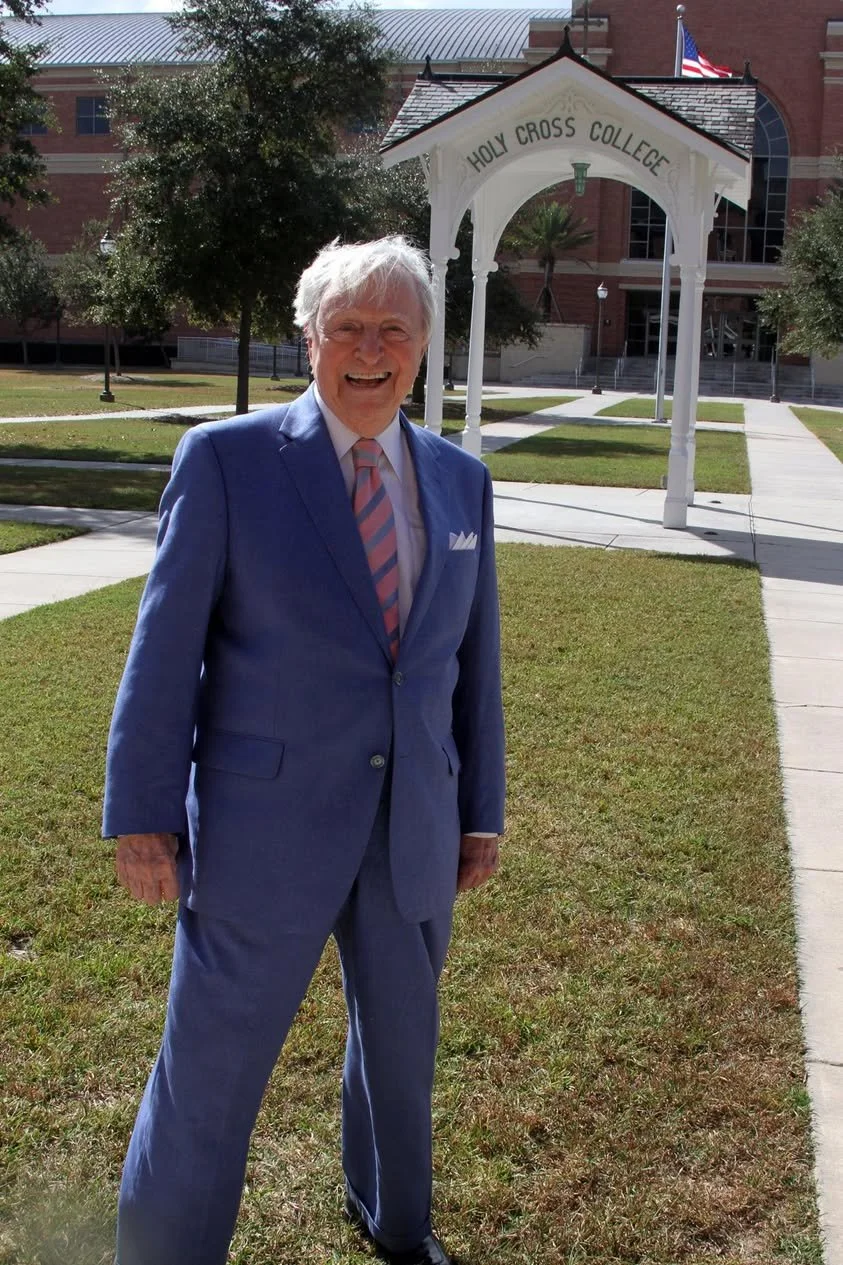
Many Loyola Alumni can say they discussed the atomic bombings of Hiroshima and Nagasaki in a history class. But how many can they discussed it as a current event in class? Donald Palmer '46 (economics) can.
Now 90 years old, Palmer earned his bachelor's degree from Loyola when he was just 19. He attended school throughout the full calendar year; there were no summer vacations for him. He started Loyola three days after graduating from Holy Cross. Wasting no time at all, he finished in two years and seven months. Unsurprisingly, much has changed at the university since his time there.
Students then took classes in Marquette Hall, but one difference was that there were lockers on the first floor for their books. He also said class sizes were very small, usually no more than 15 students, because so many people were overseas fighting World War II. He remembered leaving his bike unlocked on campus and never worrying about it being stolen.
"I wasn't the greatest of students, but I tried," Palmer says.
Palmer described the economics program at Loyola as "very fine." In particular, he fondly remembered two professors, Dr. Connor and Father Joseph A. Butt (for whom the College of Business is now named). Palmer and Connor were also both parishioners of St. Matthias Church at the corner of Napoleon and Broad. Connor passionately argued in class that Vice President Harry S. Truman would do a great job in the White House after President Franklin Delano Roosevelt died.
Palmer's time at Loyola clearly made an impression on him. In the 1990s, he donated $1.25 million to the university, which was one of the largest donations any individual had made to Loyola at that time.
There were no gap years or time off for Palmer in between graduation and the working world. He finished Loyola on a Friday and went to work at a bag company the next Monday. After working for this business for a year and a half, he left to start his own business at the age of 20. Seventy years later, the Donald Palmer Co. is still going strong.
When he began his business, it had the first plastic bag manufacturing plant in the South. Palmer would travel the country working sales, and the plant would run around the clock. He would regularly attend packing exhibitions in cities like Chicago, New York, and Cleveland, and he soaked up new information like a sponge. "I asked a million questions," Palmer says. "I found it interesting, and I always wanted to learn more."
Things were going well when disaster struck in 1965 in the form of Hurricane Betsy. When the storm hit, Palmer lost $300,000 (in 1965 dollars) in one night. He lost all 14 of his bag-making machines. But he refused to quit. He took a loan from the Small Business Administration and started up his business again one machine at a time. Two years later, he was back to full capacity. About 30 years ago, he accepted a cash offer from a North Carolina company to purchase his business.
But Palmer was not ready to retire. Instead, he started a bag distribution company from the bottom half of his Uptown home. He has a warehouse in Elmwood. While he has since hired someone else to oversee daily operations, Palmer is still involved with his company, and he has no plans to stop. He has enjoyed it all too much.
"It's been a long ride and a good life," he says. "We've had fires, and we've had floods, but we're still here."
Born out of this work ethic ethic and a heart for philanthropy, The Donald Palmer Charitable Foundation is committed to enhancing education, Christian faith, health, and competitive skills among youth.